
Argentina at the World Cup 2026: Can Messi’s Squad Defend the Title?
 Available in US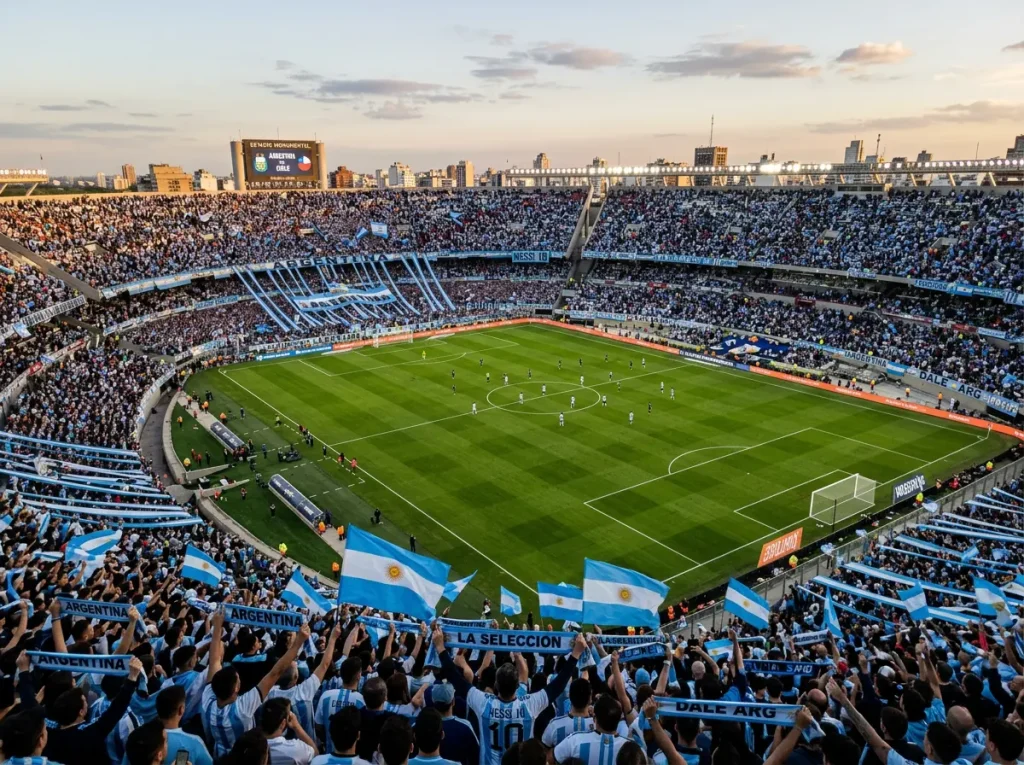
Defending a World Cup title is statistically harder than winning one. Since Brazil in 1962, no nation has successfully retained the trophy. Spain, Germany, France, and Italy all crashed out in group stages immediately following their triumphs. Argentina arrives in North America carrying both the burden of history and the reality that their greatest player enters what is almost certainly his final World Cup at age 38.
The Argentina world cup 2026 betting proposition depends on whether continuity outweighs age. The core that lifted the trophy in Qatar remains intact: Lionel Messi still pulls strings, Enzo Fernández still controls midfield tempo, and Emiliano Martínez still makes crucial saves. But three and a half years have passed. Some legs have slowed. Some hunger may have dimmed. Separating sentimental narrative from cold probability determines whether Argentina’s odds represent value or trap.
Path to 2026 — Qualifying and Form
South American qualification demanded competence rather than dominance. Argentina navigated the 18-match cycle with characteristic efficiency, securing passage well before final matchday drama that plagued lesser nations. The campaign revealed both continuity and evolution, with tactical adjustments reflecting squad composition changes while maintaining the pressing intensity that defined the Qatar triumph.
Results against direct rivals provided meaningful data points. The home victory over Brazil reinforced psychological advantages accumulated through Copa América and World Cup successes. Away matches in Bogotá and Quito tested altitude adaptation that will not factor in North American venues. Uruguay’s emergence as genuine contender produced competitive fixtures that sharpened Argentina’s tournament readiness in ways weaker opponents could not.
The Nations League and Copa América cycles between World Cups added meaningful tournament experience. Argentina defended their Copa América title in 2024, extending their winning mentality beyond a single tournament success. This continued trophy accumulation separated their post-2022 period from previous champions who stumbled after reaching the mountaintop. The squad arrives knowing how to win knockout matches in contemporary competitive contexts.
Messi’s role shifted notably during qualification. Minutes management became a theme, with Inter Miami’s MLS schedule creating fitness windows that did not always align with international breaks. When present, Messi’s influence remained decisive — but the team increasingly demonstrated capacity to control matches without him at peak involvement. This evolution suggests Argentina can survive phases where their captain conserves energy for decisive moments rather than dominating every minute.
Injury concerns punctuated the qualification cycle without derailing progress. Cuti Romero’s hamstring issues created defensive rotations that ultimately expanded depth. Ángel Di María’s retirement from international football after Copa América 2024 removed a key option but also closed debate about selection priorities. The squad heading to North America knows its roles clearly, without the friction that sometimes accompanies star-studded rosters.
Form entering the tournament reflects professionalism rather than brilliance. Argentina does not need to play peak football in March friendlies — they need to peak in June knockouts. Scaloni’s squad management demonstrates exactly this understanding, with measured performances that maintain sharpness without exhausting players who will accumulate significant minutes through deep tournament runs.
Key Players and Squad Depth
Messi’s presence defines Argentina’s ceiling while his age constrains their floor. At 38, expecting the Messi of 2014 or even 2022 ignores biological reality. What remains is intelligence that no defender can anticipate and moments of acceleration that still unlock defensive structures. Messi will not run 10 kilometers per match or press from the front for 90 minutes. He will find spaces that should not exist and deliver passes that create goals from apparent stagnation.
The practical question involves how Scaloni builds around diminished physical capacity without sacrificing Messi’s creative influence. Qualification matches showed a hybrid approach: Messi starting but rarely completing full fixtures, drifting between right-sided positions and central zones depending on game state, and increasingly serving as penalty-box finisher rather than deep-lying playmaker. Argentina has adjusted its system to maximize what Messi still offers while compensating for what he no longer provides.
Enzo Fernández emerged from Qatar as the tournament’s best young player and has since grown into Chelsea’s midfield anchor. His passing range, defensive awareness, and composure under pressure give Argentina a control option that allows Messi to conserve energy. Fernández can dictate tempo when Argentina needs to slow matches and accelerate transitions when opportunities arise. His fitness and form will determine whether Argentina controls midfield battles against European powers.
Julián Álvarez’s development since Qatar has been remarkable. The Manchester City striker has accumulated Champions League experience and big-match mentality that complements his natural finishing ability. As Messi’s legs slow, Álvarez increasingly carries goal-scoring burden, with his pressing energy also covering defensive duties that the captain cannot sustain. The Messi-Álvarez partnership may define Argentina’s tournament more than any single individual.
Emiliano Martínez proved in Qatar that goalkeeper performance peaks when pressure intensifies. His penalty shootout heroics and distribution quality give Argentina an advantage that few opponents can match. If knockout matches again require spot-kick resolution, Martínez’s psychological warfare skills tilt probability in Argentina’s favour. His shot-stopping has remained elite through Premier League campaigns, arriving at the tournament in form that matches his reputation.
Defensive depth behind Romero and Lisandro Martínez has developed through rotation. Nicolás Otamendi’s experience provides cover while younger options like Lucas Martínez Quarta have accumulated international minutes. The left-back position remains less settled than other areas, with competition continuing through pre-tournament preparation. Overall defensive organization has maintained standards set in Qatar despite personnel changes.
Attacking depth beyond the starting forwards provides knockout round insurance. Lautaro Martínez offers different tactical options when Argentina needs to break down defensive blocks. Paulo Dybala’s creativity gives Scaloni alternatives if Messi needs rest or different approaches suit specific opponents. This attacking rotation was less necessary in Qatar’s compressed format but becomes valuable across 48-team tournament structures that potentially require more matches for deep runs.
Midfield balance behind Fernández shapes Argentina’s tactical options. Leandro Paredes provides metronome passing when control matters most. Rodrigo De Paul adds energy and pressing intensity for matches requiring sustained effort. Giovani Lo Celso offers creative alternatives. Managing these options across tournament demands tests squad harmony that functioned well in Qatar but faces new challenges with aged personnel and extended fixture lists.
Group J — Algeria, Austria, Jordan
The draw delivered exactly what defending champions should expect: respect without charity. Group J contains one European side with tournament experience, one African nation with passionate support, and one Asian qualifier making their debut. Argentina should top this group comfortably. The question is whether they do so while preserving energy for knockout rounds or whether unexpected challenges extract more effort than anticipated.
Algeria represents the most emotionally charged opponent. The historical connection between Zinedine Zidane’s heritage and Argentine football creates narratives that players will navigate regardless of match relevance. Algeria qualified through African pathways that demonstrated genuine quality, with attacking options capable of punishing defensive lapses. Argentina will not overlook them despite clear talent differential.
Austria brings organized European football without elite ceilings. Their qualification through UEFA reflected competence in a competitive confederation, and their tournament experience spans multiple cycles with modest knockout aspirations. Ralf Rangnick’s tactical structures create challenges for opponents who underestimate Austrian discipline. Argentina should win but may face phases of Austrian control that test patience.
Jordan debuts as the group’s weakest side on paper, though Asian qualification required defeating stronger regional opposition. Their presence creates a fixture Argentina should dominate, offering rest opportunities for key players and goal difference padding that could matter in bracket calculations. Managing this match without complacency while maximizing recovery advantages will test Scaloni’s rotation strategies.
The fixture sequence matters for betting purposes. If Argentina faces Austria first, they may need more effort to establish group control than if they open against Jordan. Match order announcement determines whether Argentine players accumulate fatigue linearly or enjoy strategic rest opportunities. Monitor the official schedule for implications on player availability as the group progresses.
Venue assignments across American cities create travel considerations that affect preparation. If Argentina’s group matches spread between East Coast and West Coast stadiums, accumulated jet lag could factor into latter matches more than appears obvious. Condensed tournament scheduling means less recovery time between fixtures than club football provides. These logistical details shape betting angles that pure talent assessment overlooks.
Group J’s overall weakness means goal difference likely decides final seeding if Argentina and anyone else finish level on points. Maximizing margins in winnable matches while managing key player minutes creates balance that Scaloni must navigate. Expect Argentina to push for goals in matches they control, creating over total value in fixtures against Jordan and potentially Algeria depending on match flow.
Argentina’s Odds Across All Markets
Defending champion status shortens odds compared to what talent alone might warrant. Argentina currently trades between 5.50 and 6.50 to win the tournament across major Canadian sportsbooks, making them joint or sole favourites depending on platform. These prices imply roughly 16-18% win probability — realistic given their talent but demanding given historical patterns of title defense failure.
The group stage presents minimal value for outright bets. Argentina to win Group J prices around 1.20, reflecting near-certainty that offers little reward. Individual match betting might find edges against Algeria or Austria if odds drift beyond expected margins, but the primary group stage interest involves scoreline props and player markets rather than match outcomes.
Knockout round advancement markets offer tiered value. Argentina to reach the quarterfinals prices near 1.35, semifinal around 1.90, and final approximately 2.75. Each tier adds genuine uncertainty while remaining within Argentina’s realistic range. For bettors who believe Argentina matches historical champions more than recent defenders, these milestone markets express that view with measured risk.
Messi-specific props dominate specials markets. Tournament top scorer, playmaker awards, and anytime goalscorer markets all feature prominently. His actual odds depend on projected minutes and goal involvement that may decrease from 2022 levels. I would approach Messi markets cautiously — sentiment inflates his prices relative to likely statistical outcomes given age and role adjustments.
Julián Álvarez offers more interesting goalscorer value. His odds to finish among leading scorers sit longer than his expected goal involvement suggests, partly due to sharing attack with Messi. As the primary running threat in Argentina’s forward line, Álvarez should accumulate shooting opportunities that convert at rates his club form supports. Golden Boot markets may undervalue him compared to obvious candidates from other nations.
Can They Actually Defend It? The Case For and Against
Three factors support Argentine title defense. First, squad continuity preserves the understanding and confidence that delivered Qatar success. Players know their roles, trust their teammates, and believe they can win high-pressure matches because they already have. Second, Scaloni’s management has navigated the post-triumph period without complacency or dysfunction that plagued previous champions. Third, the draw provides a path that avoids elite opponents until late stages where anything becomes possible.
The case against relies on equally substantive evidence. Historical patterns show defending champions failing repeatedly across different eras and circumstances. Spain 2014 and Germany 2018 demonstrated that quality alone cannot overcome the psychological and physical challenges of consecutive tournament peaks. France 2022 reached the final again but lost, showing how fine margins prevent repeat triumph even when teams remain elite.
Messi’s age introduces uncertainty that 2022’s Messi did not carry. He was already 35 in Qatar but had prepared that cycle specifically for World Cup peak. Now approaching 39, MLS-based fitness maintenance creates questions about tournament preparation adequacy. His minutes in knockout matches will demand more recovery time than younger legs require, potentially affecting subsequent rounds more than group stage coasting.
Opponent quality in 2026 arguably exceeds 2022. France remains dangerous with Mbappé entering prime years. England’s generation continues improving. Brazil has rebuilt with emerging talents. Spain won Euro 2024 with teenagers who have matured. Germany hosts Euro 2024 momentum into World Cup form. Argentina may have peaked while rivals ascended, creating a more challenging path than three years prior.
The physical demands of a 48-team format also factor into title defense. More matches if advancing deep, more travel across North American venues, and potentially more extra time in expanded knockout structures. Argentina’s veteran core may struggle with cumulative fatigue that younger squads absorb more easily. Managing this across a longer tournament tests depth that was less crucial in 32-team formats.
Weather and climate conditions differ substantially from Qatar’s controlled environments. North American summer heat in certain venues may challenge players conditioned for European or South American winters during June. Air conditioning that defined Qatari stadiums will not exist in open-air American venues. These environmental factors could benefit younger, more athletic squads over Argentina’s technically skilled but aging core.
Bracket positioning from group stage determines knockout path difficulty. If Argentina tops Group J, they likely face a third-place finisher from weaker groups in the Round of 32. Subsequent rounds depend on other group outcomes, but strong group performance creates bracket advantages that translate into easier paths toward semifinals. If Austria somehow challenges Argentina for top spot, bracket implications could affect knockout round betting significantly.
Psychological burdens of defending titles create pressure that even experienced champions struggle to manage. Argentina’s players know history runs against them, regardless of their individual quality. Managing expectations while maintaining focus across a month-long tournament demands mental energy that adds to physical fatigue. Scaloni’s staff must navigate these dynamics alongside tactical preparation, creating additional variables that affect match-by-match performance.
Value Bets and Angles on Argentina
Outright winner at 6.00 offers fair value rather than edge. Argentina genuinely belongs among top three or four favourites, and their odds reflect that status accurately. I would not rush to back or fade them at current prices — the market has priced Argentina reasonably given available information. Value lies elsewhere in their betting portfolio.
Reaching the final at 2.75 represents the most attractive milestone market. This bet wins if Argentina advances through six matches regardless of final result. Given their talent and draw, semifinal-plus outcomes seem more probable than 36% implied odds suggest. If you believe Argentina remains elite, backing their final appearance expresses that view with better risk-reward than outright winner markets.
Avoid Messi Golden Boot bets despite tempting narratives. His minutes management will reduce goal opportunities compared to front-loaded strikers playing full matches throughout. Other nations feature younger strikers who will accumulate more shots across more minutes. Messi might win individual match awards but tournament-long scoring crowns reward volume that his role no longer provides.
Consider Álvarez each-way for Golden Boot at longer odds. His role as Argentina’s primary running threat should produce consistent goal involvement across fixtures. If Argentina reaches knockout rounds where high-scoring matches become possible, Álvarez’s accumulation could challenge established favourites. The each-way angle provides downside protection while capturing upside potential that straight win bets at short odds do not.
Live betting on Argentina matches deserves attention given their game management patterns. When Argentina controls matches, they rarely produce chaotic scorelines that swing wildly. Backing Argentina to score next or over totals after they take early leads captures value from teams that open up chasing equalizers. Scaloni’s tactical discipline creates predictable patterns that in-play markets sometimes fail to price efficiently.
Same-game parlays offer creative value expressions for Argentina fixtures. Combining Argentina to win, under 3.5 total goals, and Álvarez anytime scorer prices attractively for Group J matches against Algeria and Jordan. Argentina’s control style limits high-scoring chaos while Álvarez’s involvement should produce goals at rates the parlay structure rewards. Build conservatively with maximum three legs rather than chasing inflated payouts through risky combinations.
Defensive props may represent Argentina’s most overlooked value. Their organizational discipline should produce clean sheets against Group J opponents, with Martínez likely to face limited quality chances. Argentina to keep a clean sheet in specific group matches could price above true probability, especially against Jordan where opponent quality limits attacking threat. Track goalkeeper save totals as potential value indicators of how efficiently Argentina defends.
Tournament progression betting allows hedging as Argentina advances. If they reach quarterfinals, consider small bets against them in subsequent rounds to guarantee some return regardless of outcomes. This approach sacrifices maximum profit for guaranteed positive returns, which suits recreational bettors with Argentina exposure who want to manage downside risk. Hedging calculations become valuable as implied probabilities shift through knockout progression.
Avoid complex Argentina parlays with legs from other groups or tournaments. The temptation to bundle Argentina to win Group J with multiple other group winners creates accumulated risk that overwhelms individual edge. Argentina’s group stage outcomes carry high probability but low individual return — using them as parlay foundations with riskier legs often produces negative expected value despite appearing conservative. Bet Argentina isolation plays or simple milestone markets rather than elaborate constructions. The complete team profiles section can help identify which teams actually offer parlay synergy versus which simply inflate odds without proportionate probability.
