
Estadio Azteca: World Cup 2026 Opening Match Venue
Loading...
June 11, 2026 — Mexico versus South Africa at 2,240 metres above sea level. The 2026 World Cup begins not with the finesse of a European venue or the modernity of an American stadium, but with the raw intensity of football’s most intimidating cauldron. Estadio Azteca has broken more visiting teams than any other stadium in World Cup history, and that legacy directly affects how you should bet matches hosted in Mexico City.
This isn’t just another stadium guide. The Azteca represents a genuine betting variable that most Canadian punters underestimate. The altitude creates physiological stress that compounds throughout matches. The crowd noise reaches levels that disrupt communication between players and their bench. The history of the venue generates psychological weight that affects teams before they even arrive. These factors translate into measurable betting edges when you know how to apply them.
Estadio Azteca — A Third World Cup
The Azteca becomes the first stadium in history to host three World Cup tournaments — a distinction that speaks to its unmatched combination of capacity, atmosphere, and symbolic importance. The 1970 final saw Pelé’s Brazil triumph in perhaps the greatest team performance ever witnessed. The 1986 tournament brought Maradona’s Hand of God and Goal of the Century against England. Now 2026 adds another chapter, beginning with the opening match ceremony.
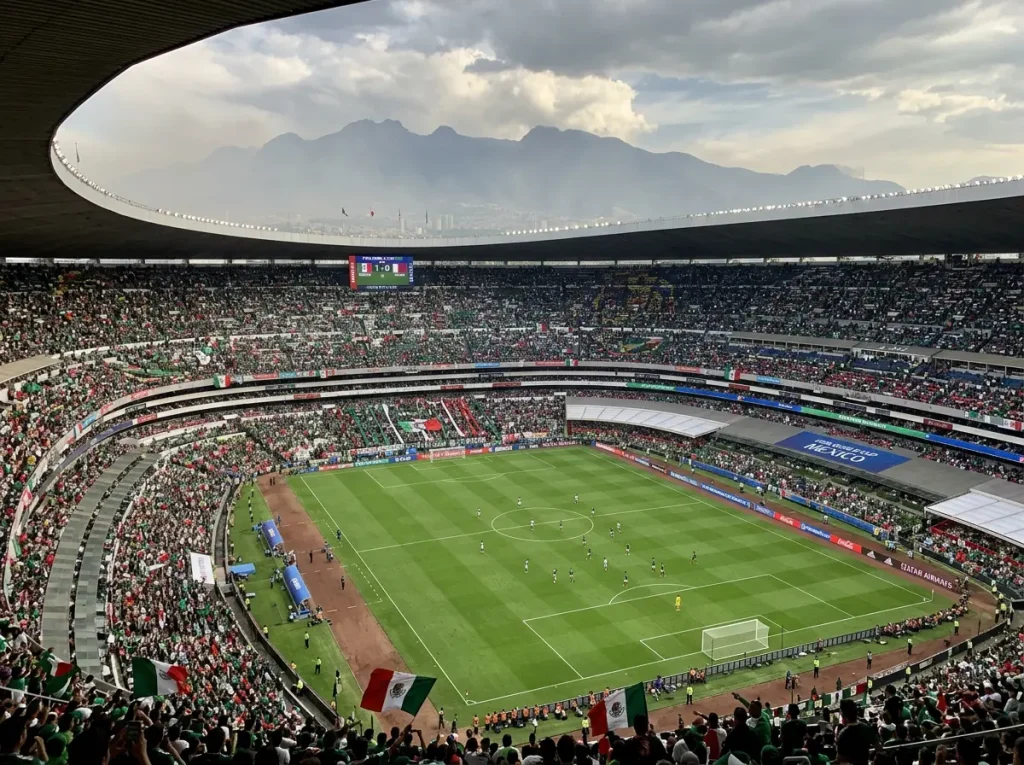
Built in 1966 specifically for the 1970 World Cup, Estadio Azteca seats approximately 87,000 — capacity that rivals MetLife Stadium’s Final venue arrangement. The bowl configuration stacks supporters in steep tiers that focus collective energy toward the pitch. Unlike modern stadium designs that prioritize corporate hospitality, the Azteca remains a working-class temple where passion takes precedence over luxury.
The stadium’s location in the southern suburbs of Mexico City situates it firmly within one of the world’s largest metropolitan areas. Over 21 million people live in Greater Mexico City, providing essentially unlimited supporter demand for any match. This demographic reality means the Azteca never lacks atmosphere — the question is only how intense that atmosphere becomes.
Renovation work completed before 2026 addresses infrastructure concerns that had accumulated over six decades. New seating, improved accessibility, upgraded concessions, and enhanced broadcast facilities bring the venue to modern standards without compromising the brutal intimacy that defines the matchday experience. The bones of the Azteca remain unchanged: steep stands, exceptional sightlines, and proximity to action that modern venues rarely match.
For Canadian bettors, the Azteca presents a venue unlike anything in our experience. The closest North American comparison might be Estadio Universitario in Monterrey or perhaps the old Azteca itself during CONCACAF qualifiers — but nothing in Canada prepares you for the altitude and atmosphere combination. This unfamiliarity among our betting public creates opportunities for those who study the venue’s specific effects.
Confirmed Matches
The opening match honours go to Mexico against South Africa on June 11 at 11:00 local time (13:00 ET). This fixture inaugurates not just the 2026 World Cup but the first North American World Cup since 1994 and the first-ever 48-team tournament. The ceremonial weight adds psychological pressure that compounds altitude and atmosphere effects.
Mexico’s opening match positioning isn’t coincidental — FIFA tradition typically gives one host nation the tournament’s first fixture. The home advantage for El Tri in this match is essentially absolute. South Africa travels from sea level, faces altitude adjustment with minimal acclimatization time, and plays in front of 87,000 hostile supporters during a global spotlight moment. The betting markets appropriately price Mexico as heavy favourites.
Group A’s other confirmed Azteca fixture is South Korea versus Czechia on June 12 at 18:00 local time (20:00 ET). This evening match provides different conditions than the opening ceremony midday kickoff — cooler temperatures, full artificial lighting, and an audience potentially more divided between Korean diaspora supporters and neutral Mexican observers.
The Azteca will also host matches from other groups during the opening phase, with exact allocations filling the venue’s capacity throughout June 11-26. These group stage matches establish patterns that inform knockout round betting, as teams that perform well at altitude often repeat that success while those who struggle tend to struggle again.
Knockout round allocation gives the Azteca a Round of 16 fixture on July 4, potentially featuring a group stage performer returning to familiar conditions. The bracket structure means certain paths lead through Mexico City while others avoid it entirely — information that matters when evaluating teams’ tournament progression chances based on altitude tolerance.
The Altitude Factor — 2,240 Metres Above Sea Level
Forget everything you know about normal football when analyzing Azteca matches. At 2,240 metres elevation, the atmospheric pressure drops to roughly 75% of sea-level values, reducing available oxygen with every breath. This isn’t subtle discomfort — it’s a genuine physiological challenge that affects conditioning, recovery, and second-half performance in measurable ways.
The science is straightforward. Lower oxygen availability means muscles fatigue faster, particularly during high-intensity efforts like sprinting, pressing, and tracking back. Teams that play high-tempo football at sea level find themselves unable to sustain that intensity beyond 60-70 minutes at altitude. The final quarter of matches at the Azteca regularly features visible exhaustion among visitors, with pressing disintegrating and defensive shape loosening.
Acclimatization helps but requires time most tournament schedules don’t provide. Optimal altitude adjustment takes 10-14 days of training at elevation, a luxury few World Cup teams enjoy. Mexico’s squad trains regularly at altitude and includes many players whose entire careers unfolded in Liga MX’s high-elevation clubs. This structural advantage translates directly to 80th-minute legs that visitors can’t match.
For betting purposes, altitude creates specific patterns. First-half results at the Azteca correlate less strongly with final results than at sea-level venues. Visiting teams often compete evenly for 45-60 minutes before altitude effects compound. The live betting implications are significant: second-half betting on Mexico or other altitude-acclimated teams offers value that pre-match odds don’t capture.
Ball flight also changes at altitude. Reduced air resistance means long passes travel farther and faster, goalkeepers must adjust timing for shots and crosses, and swerve on set pieces behaves differently than players experience at lower elevations. Teams that haven’t prepared specifically for altitude physics face genuine adjustment challenges during live match situations.
Historical data supports these effects decisively. Mexico’s home record at the Azteca in World Cup qualifiers exceeds their overall home record by substantial margins. The pattern holds for club football too — sea-level teams visiting Mexican highland venues underperform expectations consistently. This isn’t coincidence; it’s physiology creating predictable betting edges.
World Cup History at the Azteca
The ghosts of football history inhabit this stadium more densely than any other venue. Understanding what happened here before 2026 provides context for the psychological weight visiting teams carry when they enter the bowl. This isn’t merely academic — players know this history, and it affects performance.
The 1970 World Cup Final between Brazil and Italy remains the defining image of World Cup football for many observers. Brazil’s 4-1 victory featured perhaps the greatest team performance ever, with Carlos Alberto’s famous fourth goal completed by every outfield player touching the ball. That match established the Azteca as a stage for historic football rather than merely a large stadium.
The 1986 tournament added Maradona’s most controversial and most brilliant moments within four minutes of each other. The Hand of God goal against England — Maradona’s punched effort that the referee allowed — and the Goal of the Century that followed immediately live in football consciousness permanently. These events happened on this pitch, in this stadium, creating mythology that persists.
Mexico’s national team has used the Azteca as a fortress for decades beyond World Cup tournaments. CONCACAF qualifying campaigns routinely produced dominant home performances where visiting CONCACAF nations struggled to compete. The United States’ famous Dos a Cero losses to Mexico happened elsewhere, but the Azteca represented an even more challenging venue during certain eras.
The psychological weight of this history creates a self-reinforcing dynamic. Teams arrive knowing they’re entering football’s most legendary venue, facing altitude challenges in front of historically hostile crowds. That mental burden compounds physical challenges, creating performance suppression that objective talent assessments don’t predict.
How Altitude and Atmosphere Affect Betting
Nine years of analyzing matches at altitude taught me to respect what the Azteca does to visiting teams. The betting implications are concrete enough that I adjust my models specifically for Mexico City fixtures. Here’s how those adjustments work in practice.
First-half unders at the Azteca hit at higher rates than my models predict for equivalent fixtures at sea level. Teams play cautiously while managing energy reserves, knowing the second half demands physical conservation. This caution produces fewer goals in opening 45 minutes, creating value on first-half totals below 1.5.
Second-half overs compensate as altitude exhaustion opens matches. Defensive structures that held through 60 minutes collapse when players can no longer execute demanding recovery runs. Mexico’s domestic league data shows second-half goal rates approximately 20% higher in highland venues compared to coastal stadiums — a pattern that transfers to international competition.
For moneyline betting, Mexico at the Azteca deserves more respect than their FIFA ranking suggests. The altitude-atmosphere combination creates home advantage exceeding that of any other venue in the tournament. Pre-match odds often underweight this venue effect, particularly when Mexico faces European teams whose players have no altitude experience.
The opening match against South Africa offers a specific application. South Africa travels from Johannesburg, which sits at 1,750 metres — actually higher than many sea-level nations but still 500 metres below the Azteca. This provides partial acclimatization advantage over truly sea-level opponents, somewhat moderating Mexico’s altitude edge. However, the ceremonial pressure and hostile atmosphere create compound challenges that altitude adjustment alone doesn’t address.
Live betting at the Azteca requires patience. The 65th-75th minute window typically reveals which team can sustain intensity, and markets often take several minutes to fully adjust to visible exhaustion. If you’re watching matches closely and notice pressing disintegrating or movement patterns slowing, the live odds may lag observable reality by enough to create betting windows.
For context on how altitude intersects with tournament structure, the full group stage breakdown shows which teams might face Azteca fixtures during their World Cup path. Teams drawn into groups with Mexico City matches face a specific challenge — one that compounds if their knockout bracket also routes through the Azteca.