
SoFi Stadium at the World Cup 2026: LA’s Flagship Venue
Loading...
The most expensive stadium ever built sits under Southern California sunshine, waiting to host World Cup football for the first time. SoFi Stadium’s $5.5 billion price tag delivered technology and spectator experience that no other venue in the tournament can match — but does that translate into betting edges? After studying this venue since its 2020 opening, I’ve identified specific factors that affect match outcomes in ways most bettors overlook.
Los Angeles represents the entertainment capital of North America, and its World Cup venue reflects that identity. SoFi Stadium brings Hollywood production values to football, with LED screens, acoustic engineering, and climate control that create conditions unlike any traditional stadium. Understanding what those conditions mean for the matches played here helps inform your wagering decisions throughout the tournament.
SoFi Stadium — The Newest World Cup Venue
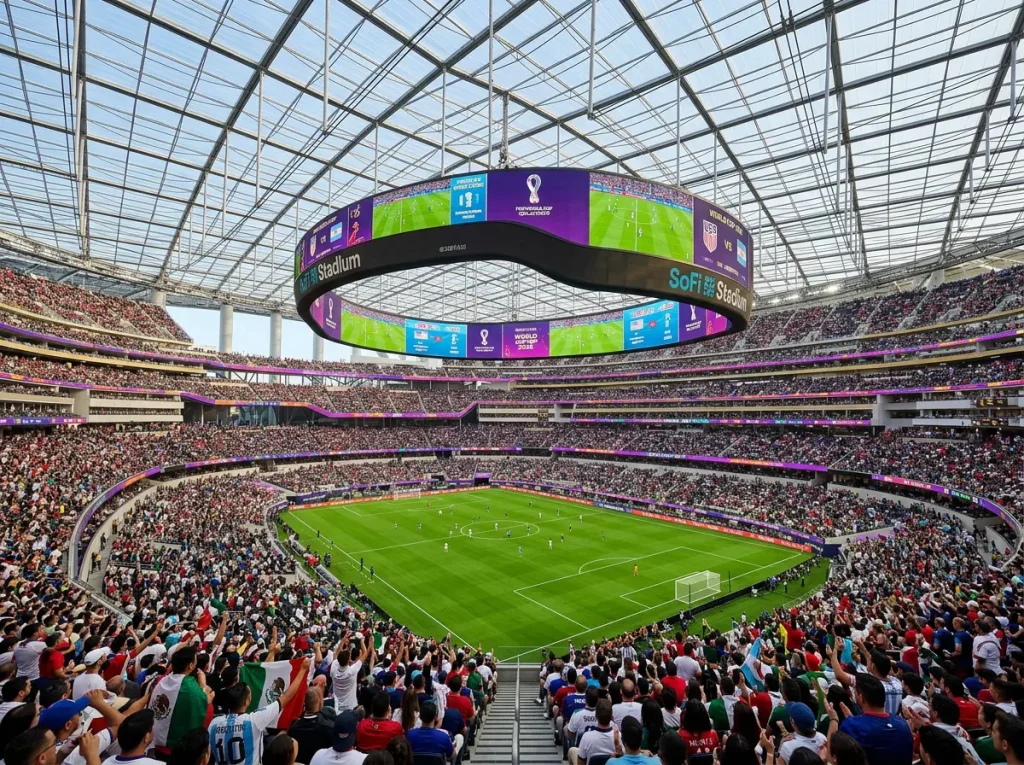
Walking into SoFi Stadium for the first time produces a reaction that no other venue generates. The semi-translucent ETFE roof creates an ethereal quality, allowing natural light while protecting from direct sun exposure. The 70,000-square-foot Oculus video board dominates the interior, providing visual experiences that transform sporting events into multimedia spectacles. This isn’t merely a football stadium — it’s a technological achievement that happens to host football.
The venue opened in September 2020 after years of construction in Inglewood, just south of Los Angeles proper. The Rams and Chargers of the NFL share the facility as primary tenants, bringing championship-level football to LA after decades without a resident team. That NFL foundation translates to World Cup readiness, with infrastructure designed for the highest-profile sporting events imaginable.
SoFi Stadium’s roof structure deserves specific attention for betting purposes. Unlike truly enclosed venues like AT&T Stadium in Dallas, SoFi maintains openings that allow airflow while blocking direct precipitation and most sun exposure. This creates semi-outdoor conditions — temperature-moderated but not climate-controlled, with natural light patterns that shift throughout matches depending on time of day and sun angle.
The playing surface presents an interesting case study. NFL operations require artificial turf, but World Cup regulations mandate natural grass. The solution involves a removable tray system where natural grass sections installed weeks before tournament play replace the artificial surface. This system has been tested for international matches, producing quality playing conditions that meet FIFA certification standards.
Capacity for World Cup fixtures reaches approximately 78,000, placing SoFi among the larger tournament venues. The seating bowl configuration brings supporters relatively close to the pitch despite the massive capacity, with steep lower bowl sections and excellent sightlines throughout. The acoustic engineering amplifies crowd noise in ways that surprise first-time visitors, creating atmosphere despite the semi-open roof design.
Los Angeles County’s population exceeds 10 million, with the broader Southern California region adding millions more potential supporters. This demographic base ensures robust attendance for any match allocation, with particular intensity for fixtures involving Latin American nations whose diaspora communities dominate regional demographics. Mexico, Argentina, Colombia, and Brazil matches at SoFi will feel like home fixtures for visiting teams.
Confirmed World Cup Fixtures
SoFi Stadium’s match allocation reflects its status as a premier venue with massive capacity. The stadium will host multiple group stage fixtures, Round of 16 matches, a quarterfinal, and a semifinal — one of the heaviest utilization schedules among North American venues. This density creates both pitch management challenges and data collection opportunities for bettors tracking surface conditions.
Group stage fixtures at SoFi include matches from Groups C, F, and K, featuring nations such as Brazil, Netherlands, Portugal, and Japan. The exact schedule places high-demand fixtures at this high-capacity venue, ensuring the stadium fills regardless of which specific teams play. Los Angeles’s diverse population means supporter bases exist for virtually any World Cup participant.
The knockout round allocation begins with a Round of 16 fixture on July 5, placing SoFi Stadium in the middle bracket path. A quarterfinal on July 11 continues the venue’s elimination round hosting, with bracket positioning determining which group winners and runners-up route through Los Angeles. The semifinal on July 14 represents the tournament’s penultimate round, three days before the MetLife Stadium Final.
The semifinal allocation gives SoFi Stadium particular importance for teams targeting the Final. Whatever team wins in Los Angeles on July 14 plays for the World Cup four days later in New Jersey. This creates specific preparation and travel considerations that could influence semifinal betting, as teams must balance recovery needs against tactical preparation for a potential Final appearance.
For Canadian bettors following the host nation, Group B fixtures occur elsewhere — meaning Canada wouldn’t play at SoFi during group stages. However, knockout round progression could theoretically route Canada through Los Angeles depending on group stage outcomes and bracket positioning. The scenario remains speculative but worth noting when considering outright futures and advancement odds.
Venue Features and Playing Conditions
The semi-translucent roof creates playing conditions that differ from both open-air and fully enclosed venues. Natural light filters through the ETFE panels, producing illumination patterns that shift throughout matches as the sun moves. The roof blocks direct UV exposure while allowing enough ambient light that daytime matches feel outdoor-adjacent. This matters for player visibility, surface temperature, and the psychological experience of playing in natural versus artificial light.
Temperature moderation represents the roof’s primary functional benefit. Los Angeles summer temperatures regularly exceed 32°C, conditions that would create genuine heat stress in fully open-air venues. The roof provides shade that keeps pitch-level temperatures significantly lower than exterior readings, while open sections allow airflow that prevents the stagnant conditions of fully enclosed climate control.
The natural grass installation requires intensive maintenance given the temporary nature of the surface. Grounds crews monitor soil conditions, hydration levels, and grass health continuously, with FIFA inspectors certifying surface quality before each match. By later knockout rounds, the accumulated wear from multiple fixtures creates potential for uneven ball roll or footing concerns — factors that inform live betting during matches.
The Oculus screen and sound system create atmosphere that compensates for the semi-open acoustics. Unlike enclosed domes where crowd noise reflects infinitely, SoFi’s design allows some sound escape through the roof openings. The venue compensates through speaker systems that enhance crowd noise and visual displays that maintain energy during match lulls. The result is atmosphere that rivals enclosed venues despite the architectural differences.
Altitude at SoFi Stadium sits at approximately 35 metres above sea level, creating no physiological challenges for any team. This sea-level positioning contrasts sharply with Mexico City’s Azteca, meaning teams playing both venues during the tournament face minimal adjustment for Los Angeles matches. The neutral altitude removes a variable from betting calculations, simplifying analysis to tactical and form-based factors.
Los Angeles as a World Cup Host City
The entertainment industry’s global capital brings specific dynamics to World Cup hosting that affect everything from team focus to supporter behaviour. Los Angeles isn’t merely a sports city — it’s a destination that creates distractions for players accustomed to quieter tournament environments. Whether those distractions help or hinder depends on team discipline and management protocols.
Historical precedent from 1994 World Cup matches in the Rose Bowl suggests Los Angeles crowds engage enthusiastically with international football. That tournament’s success contributed to MLS formation and demonstrated American appetite for the sport. The 2026 iteration benefits from three decades of American football culture development, with supporter understanding and enthusiasm far exceeding 1994 levels.
Latin American diaspora communities create genuine home atmosphere for Mexican and Central/South American nations. LA Galaxy’s consistent success draws on these supporter bases, and World Cup matches featuring regional teams will fill SoFi with fans whose loyalty and intensity rival anything in South America. Teams playing against these nations face crowd hostility that neutralizes typical home venue advantages.
Celebrity attendance at SoFi Stadium matches is essentially guaranteed. The entertainment industry’s presence in Los Angeles means high-profile spectators at every significant sporting event. Whether this affects player performance is debatable, but the media attention and global visibility of SoFi fixtures exceeds most other venues. Teams seeking spotlight may relish these conditions; those preferring anonymity find them challenging.
Accommodation and transportation around Inglewood presents challenges that affect supporter logistics. The stadium sits in a developing area with limited nearby hotels, pushing many visitors toward downtown LA or beach communities. Traffic during events creates significant delays, making public transit and rideshare the practical options despite LA’s car-centric culture. Bettors attending matches should plan arrivals accordingly.
Betting Factors — Indoor Feel, Crowd Energy
The controlled conditions at SoFi Stadium reduce the weather variables that create betting edges at open-air venues. Rain doesn’t affect matches. Wind patterns are minimal. Temperature remains stable throughout. This stability benefits technical teams whose style depends on consistent surface conditions, while reducing advantages for teams comfortable in challenging weather.
The natural grass surface installed for World Cup play produces different bounce and roll characteristics than the artificial turf used for NFL operations. Teams expecting the rapid ball movement of synthetic surfaces may find adjustment challenging, while those accustomed to European natural grass conditions feel comfortable immediately. This surface factor advantages technical possession-oriented teams.
Crowd composition at SoFi varies dramatically based on matchup. Latin American fixtures produce partisan atmospheres rivaling home venues. European matchups without significant LA diaspora representation may feel comparatively neutral. Assessing crowd expectations for specific fixtures helps inform home advantage calculations that typically assume consistent venue effects.
The afternoon and early evening kickoff times for LA matches mean natural light transitions during some fixtures. The semi-translucent roof creates changing illumination patterns as the sun sets, with artificial lighting gradually supplementing natural light. Players and goalkeepers may face adjustment challenges during transitional periods, creating potential for errors that live bettors can anticipate.
SoFi’s involvement in knockout rounds means the venue hosts increasingly high-stakes matches as the tournament progresses. Quarterfinal and semifinal betting at SoFi should account for accumulated pressure and fatigue among remaining teams. The semifinal’s position three days before the Final creates specific rest and travel considerations that could influence wagering on that fixture.
For comprehensive understanding of how SoFi Stadium fixtures fit into tournament progression, review the group stage structure to identify which bracket paths route through Los Angeles. Teams whose knockout journey includes SoFi must account for cross-country travel logistics that could affect recovery and preparation timelines.