
Canada at the World Cup 2026: Betting Guide for the Home Side
Loading...
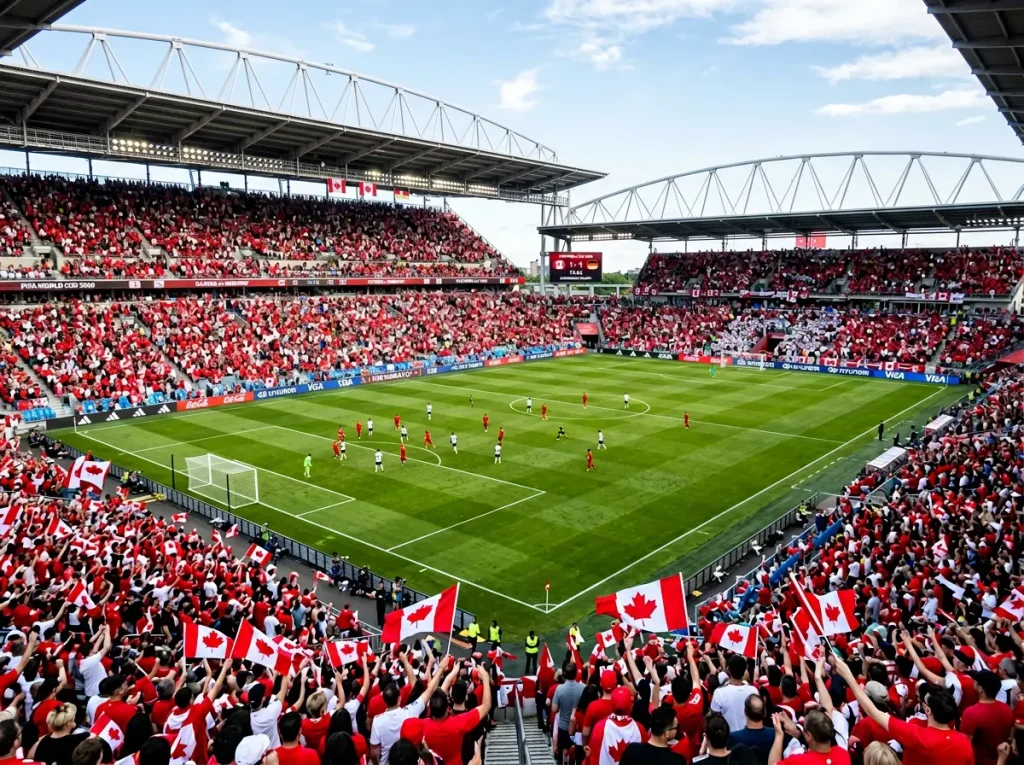
Every generation of Canadian soccer fans waited for this. Not just qualification — we managed that in 2022 after a 36-year absence. This time Canada hosts, plays every group stage match on home soil, and enters with genuine knockout round ambitions. The betting case for Canada at the 2026 World Cup rests on three pillars: home advantage quantified in historical data, a generation of players hitting prime years, and a group draw that avoids the tournament’s elite until later rounds.
I have tracked Canada’s odds movement since co-hosting rights were confirmed. The market has gradually shortened as the national team proved their Qatar performance was floor rather than ceiling. What follows is a practical breakdown of how to approach Canada world cup 2026 betting, covering squad dynamics, match-by-match analysis, and specific markets where value exists. No maple leaf sentimentality — just assessment of where odds reflect probability and where they do not.
How Canada Got Here — Hosts, Not Just Guests
The cynics will say automatic qualification as co-hosts devalues Canada’s presence. Those cynics misunderstand what the past four years revealed. This is not the 1986 squad that arrived in Mexico through regional qualification quirks and departed with three losses and zero goals. Canada 2026 builds on foundations laid through genuine competitive success.
The CONCACAF qualifying campaign for Qatar 2022 announced Canadian soccer’s arrival. First place in the Octagonal ahead of Mexico and the United States was not supposed to happen. Canada accumulated 28 points from 14 matches, losing only twice while scoring 23 goals. The underlying numbers supported the table position — expected goals models ranked Canada among CONCACAF’s best attacking sides, and defensive metrics showed structured organization rather than lucky results.
Qatar 2022 itself delivered mixed lessons. A 1-0 loss to Belgium came with xG figures that could have produced a Canadian win on another day. The 4-1 defeat to Croatia exposed limitations against tournament-hardened European sides. Morocco’s 2-1 victory completed an exit that felt premature but provided crucial experience for a squad that needed tournament exposure. Alphonso Davies scored Canada’s first World Cup goal since 1986 — a moment that symbolized transition rather than arrival.
The interim period between Qatar and hosting has been developmental rather than triumphant. Results in friendlies and Nations League matches varied from impressive victories to frustrating defeats. But the squad deepened. Young players like Tajon Buchanan established themselves in European leagues. The core aged into peak years rather than beyond them. By spring 2026, Canada fields its strongest squad in history while playing its most important matches in Toronto and Vancouver.
Automatic hosting qualification changed nothing about Canada’s preparation trajectory. The team continued playing competitive matches through Nations League structures, building cohesion that will peak when the tournament arrives. Home advantage is not a substitute for quality — it is a multiplier on quality that already exists. Canada brings both to June.
Key Players to Watch
Squad assessment requires separating reputation from current impact. Canadian players have achieved visibility that would have seemed impossible a decade ago, with starters at major European clubs and depth options scattered across competitive leagues. The question for World Cup betting is which players translate club form into international performance during June and July.
Alphonso Davies — The ACL Factor
The Bayern Munich defender returned from anterior cruciate ligament surgery in early 2026 after an injury sustained the previous autumn. His recovery timeline dominated Canadian soccer coverage for months, with every training session update analyzed for tournament implications. By spring competitive action, Davies showed the explosive pace that made him world-class, though match fitness accumulation remained ongoing.
Davies at full capacity changes Canada’s entire profile. His ability to receive possession deep and transition through central areas before sprinting into attacking positions creates structural advantages few opponents can match. In Canada’s optimal formation, Davies operates as a hybrid left-back who pushes into midfield zones when Canada controls possession. This asymmetry overloads the left side and draws defensive attention that creates space for central runners.
The betting consideration involves fitness trajectory between now and June 12. If Davies enters the opener against Bosnia and Herzegovina at 90% match sharpness, Canada becomes a different proposition than if he is managing minutes carefully. Monitor pre-tournament friendlies for usage patterns. Heavy minutes suggest confidence in his condition. Cautious substitutions suggest management concerns that could affect early group matches.
Jonathan David
The Lille striker represents Canada’s most consistent goal threat. His movement creates space even when supply chains struggle, and his finishing technique converts half-chances that other forwards squander. David’s 2025-26 Ligue 1 campaign reinforced his status among Europe’s reliable strikers, with goal production that attracted interest from clubs beyond France.
International tournaments present different challenges than league football, and David’s sample size remains limited. His Qatar 2022 minutes produced promising moments without decisive outcomes. The question is whether playing at home with crowd support unlocks another level or whether tournament pressure constrains his natural game. His betting value appears in goalscorer markets where his consistency warrants consideration despite Canada’s underdog status in outright terms.
Supporting Cast
Tajon Buchanan brings pace and directness from wide positions that complement David’s central movement. His European development since joining Club Brugge and subsequent moves has refined his decision-making without dulling his threat. Buchanan on the right with Davies pushing high from the left gives Canada width that can stretch organized defenses.
Stephen Eustáquio controls midfield tempo when Canada builds through central areas. His time at Porto sharpened technical quality that Canadian midfielders historically lacked. Eustáquio’s passing range and spatial awareness provide the platform from which Davies and Buchanan launch runs. His fitness and form will determine whether Canada can control possession in competitive group matches.
The defensive core around Milan Borjan in goal has shown solidity in competitive fixtures. Kamal Miller and Moise Bombito form a partnership that has accumulated meaningful minutes together, reducing the improvisation that plagued earlier Canadian defenses. Whether this unit can contain Switzerland’s experience and Bosnia’s attacking quality represents the group stage’s central defensive question.
Group B — Canada’s Road Map
The draw delivered neither disaster nor dream. Group B contains two teams Canada can beat, one team Canada must compete with, and no opponent beyond reach. Switzerland arrives as the experienced favourite. Bosnia and Herzegovina qualified dramatically through playoff upset. Qatar brings Asian Championship credentials. Canada hosts all three matches with ambitions of topping the group.
Matchday 1 vs Bosnia and Herzegovina
June 12 at BMO Field sets the tournament’s tone. Bosnia shocked Italy on penalties during UEFA qualification, demonstrating resilience that earned them this stage. Their attacking quality centers on Edin Džeko, who at 40 remains dangerous if supplied properly, and a supporting cast that has shown the capacity to create chances against elite defenses. Canada should not dismiss Bosnia as a gimme despite home advantage.
The opening match carries weight beyond three points. Win here and Canada enters the Qatar fixture with cushion that allows tactical flexibility. Draw or lose and subsequent matches become must-win scenarios that change risk calculus. Home crowds at BMO Field should tilt margins in Canada’s favour, but first tournament matches produce nervous performances that deviate from expected patterns. I see value in over 2.5 goals if both teams play attacking football rather than cautious openers.
Matchday 2 vs Qatar
June 18 in Vancouver presents Canada’s most winnable fixture on paper. Qatar’s 2022 home World Cup produced group stage exit despite hosting advantages, and their subsequent Asian Cup victory came against regional competition below World Cup knockout standards. The gap between Asian elite and European mid-table is real, and Canada has demonstrated ability to exploit it.
Qatar will park defensively and counter, understanding their path to survival involves limiting damage rather than outscoring opponents. Canada’s task is breaking down organized defenses that concede space reluctantly. If Davies operates at full capacity, his ball-carrying can unlock defensive structures that conventional passing struggles to penetrate. Expect a lower-scoring match than the Bosnia opener with Canada as clear favourites regardless of odds.
Matchday 3 vs Switzerland
June 24 in Vancouver decides the group. Switzerland brings tournament experience that Canada cannot match — consistent knockout round appearances, competitive performances against elite nations, and a squad that knows how to manage high-stakes matches. They are rightly favoured to top Group B but not by margins that preclude Canadian upset.
By this match, both teams should know what they need. If Canada has six points from two wins, a draw might suffice for top spot depending on goal difference. If Canada carries four points, victory becomes necessary for group leadership. Switzerland’s approach will depend on their own position. These situational variables make advance prediction difficult, but the match should offer live betting opportunities as positions crystallize during play.
Canada’s Odds Across Key Markets
Sportsbooks have shortened Canada’s outright winner odds from preposterous to merely long. The current range sits between 67.00 and 75.00 across major Ontario platforms, reflecting genuine uncertainty about how far home advantage extends. These odds imply roughly 1.4% probability of Canada lifting the trophy — low but not zero given tournament variance.
More actionable markets exist in tournament milestones. Canada to reach the Round of 32 prices around 1.30 given automatic third-place qualification potential in the new 48-team format. The meaningful line is Canada to top Group B, currently around 3.00, which represents the path to favourable knockout draws. Reaching the quarterfinals trades near 5.00, requiring Canada to win Group B and then defeat a beatable Round of 32 opponent plus a Round of 16 side that could include mid-tier European or South American teams.
Match betting offers the most precise value assessment. Canada opens as slight favourites against Bosnia around 1.90, clear favourites against Qatar near 1.55, and underdogs against Switzerland around 3.40. These prices reflect reasonable probability assessments with home advantage priced in. Value lies in specific match outcomes rather than accepting face-value moneylines.
Player props provide betting angles for those confident in individual performance. Jonathan David’s tournament goal total and anytime scorer markets warrant attention given his finishing rate and expected minutes. Alphonso Davies props combine risk and reward depending on fitness questions. Team defensive markets like clean sheet totals offer value if you believe Canada’s organization holds against Asian and Balkan opposition.
Tactical Setup and Playing Style
Jesse Marsch inherited a squad built by John Herdman and refined tactical approaches while maintaining the pressing identity that fueled qualification success. Canada’s best performances come when high pressing forces turnovers in dangerous areas, transitioning rapidly through Davies and Buchanan into shooting positions before opponents reorganize. The question is whether this intensity sustains across tournament football’s compressed schedule.
Formation flexibility has expanded under recent management. Canada can operate in 4-3-3 with Davies inverted or 3-4-3 with Davies as wing-back depending on opponent and match state. This adaptability complicates opposition preparation and allows tactical adjustments within matches. Against Switzerland’s experience, such adjustments may determine whether Canada earns points or leaves empty.
Set piece delivery has improved through dedicated work. Canada scored frequently from corners and free kicks during qualification, exploiting aerial advantages that the squad’s height profile provides. Against organized European defenses that limit open play opportunities, set piece conversion can determine margins in tight matches. Specific targeting of far-post runs and short corner variations has become increasingly sophisticated under current coaching staff, creating rehearsed patterns that opponents struggle to prepare for without extensive video review.
Defensive organization represents the underrated foundation of Canada’s tournament approach. The back line communicates in English consistently, eliminating translation delays that multinational squads sometimes experience. Compactness between lines has improved through repetition, with midfield tracking runs that previously left defenders exposed. If Canada keeps clean sheets against Bosnia and Qatar, they enter the Switzerland match with defensive confidence that can absorb pressure from technically superior opponents.
The Home Advantage Factor
Historical data quantifies what intuition suggests. World Cup hosts over-perform implied odds at rates that cannot be explained by coincidence. Since 1990, host nations have reached knockout rounds in 100% of tournaments and semifinals in over half. South Korea in 2002, Russia in 2018, and South Africa in 2010 all exceeded pre-tournament expectations by margins that reflected more than random variance.
Canada’s home advantage multiplies through several mechanisms. BMO Field and BC Place crowds will generate atmospheres that Canadian players have experienced but opponents have not. Travel fatigue affects European and Asian opponents arriving across multiple time zones, while Canada sleeps in familiar beds. Training facilities and dietary preparation eliminate adaptation variables that touring teams must manage. These factors compound rather than merely add.
The psychological dimension extends beyond measurable logistics. Players competing for their home nation in front of family and community experience motivation that neutralizes tournament pressure other teams feel. Referees, consciously or not, respond to crowd reactions in ways that marginally favour home sides. Ball boys and stadium operations support home team rhythm. These marginal effects accumulate across 90 minutes and across multiple matches.
Climate and altitude create additional edges for specific venues. June in Toronto and Vancouver brings temperate conditions that Canadian players train in year-round. European teams arriving from late-season domestic campaigns may have conditioned for different weather patterns. Qatar’s squad adapts to North American summer after years in Middle Eastern heat. These environmental adjustments consume preparation time that home teams invest elsewhere.
The betting implication involves adjusting implied probabilities upward from what neutral venue analysis would suggest. A match that would be 50-50 on neutral ground might be 55-45 in Canada’s favour at home. Across three group matches, that shift produces meaningfully higher advancement probability than odds currently reflect. The market partially prices home advantage but historical patterns suggest systematic undervaluation that creates betting opportunities.
Best Value Bets on Canada
My bankroll allocation for Canada markets focuses on specific scenarios rather than outright triumph. The tournament winner market offers poor expected value even at 75.00 — you are betting against 98.5% probability of losing. Better options exist in milestone markets and match-specific situations.
Canada to top Group B at 3.00 represents the most attractive single wager. This requires beating Bosnia and Qatar while splitting points with or defeating Switzerland — challenging but achievable given home matches throughout. Topping the group creates favourable knockout draws that extend tournament life beyond Round of 32 elimination.
Match betting on the Bosnia opener offers value at Canada around 1.90 or better. First tournament matches produce chaotic results, and Bosnia’s path through playoff victory does not guarantee group stage readiness. Home crowd advantage peaks in tournament openers when atmosphere is freshest and opponent adjustment incomplete.
Jonathan David anytime scorer props throughout group stage represent cumulative value. His pricing as Canadian goalscorer likely sits below what his finishing rate and expected minutes suggest. Across three matches with anticipated possession dominance in at least two, David getting on the scoresheet repeatedly seems likelier than his odds imply.
Live betting opportunities will emerge as match situations develop. If Canada trails early against Bosnia or Switzerland, in-play odds may swing to values that exceed true probability. Home teams trailing at halftime historically outperform implied second-half odds. Keeping bankroll reserved for live opportunities rather than committing entirely pre-match allows responsive value capture.
Avoid parlays that combine Canadian outcomes with high-risk legs from other groups. The temptation to bundle Canada to qualify with Argentina to win Group J and England to reach semifinals creates accumulated risk that overwhelms individual edge. If you bet Canada, bet them in isolation or with highly probable supporting legs that do not inflate overall parlay odds beyond reasonable expectation.
Consider hedging opportunities if Canada wins the first two group matches convincingly. Leading into the Switzerland fixture with six points and positive goal difference may create situations where small bets against Canada lock in group stage profit regardless of final match outcome. This approach sacrifices maximum upside for guaranteed returns, which suits bankroll management strategies for most recreational bettors. More detailed analysis of Canada’s Group B reveals how these scenarios might unfold across different result combinations and goal difference implications for knockout round seeding.
Prop bet combinations offer creative value expressions. A same-game parlay of Canada win, under 3.5 total goals, and Jonathan David anytime scorer against Qatar might price attractively despite each individual leg sitting below even money. Building targeted props that align with expected match dynamics extracts value that single-market betting cannot access. Just respect correlation restrictions that different sportsbooks apply to these combination bets.
The emotional dimension deserves acknowledgment even in analytical context. Canadian bettors will feel tempted to overbet national team matches based on hope rather than probability. Set firm bankroll limits before the tournament begins and stick to them regardless of opening match results. Tournament success stories begin with disciplined betting on early matches, not with aggressive early wagers that deplete bankroll before knockout rounds arrive.