
World Cup 2026 Group C: Brazil, Morocco, Haiti, Scotland
Loading...
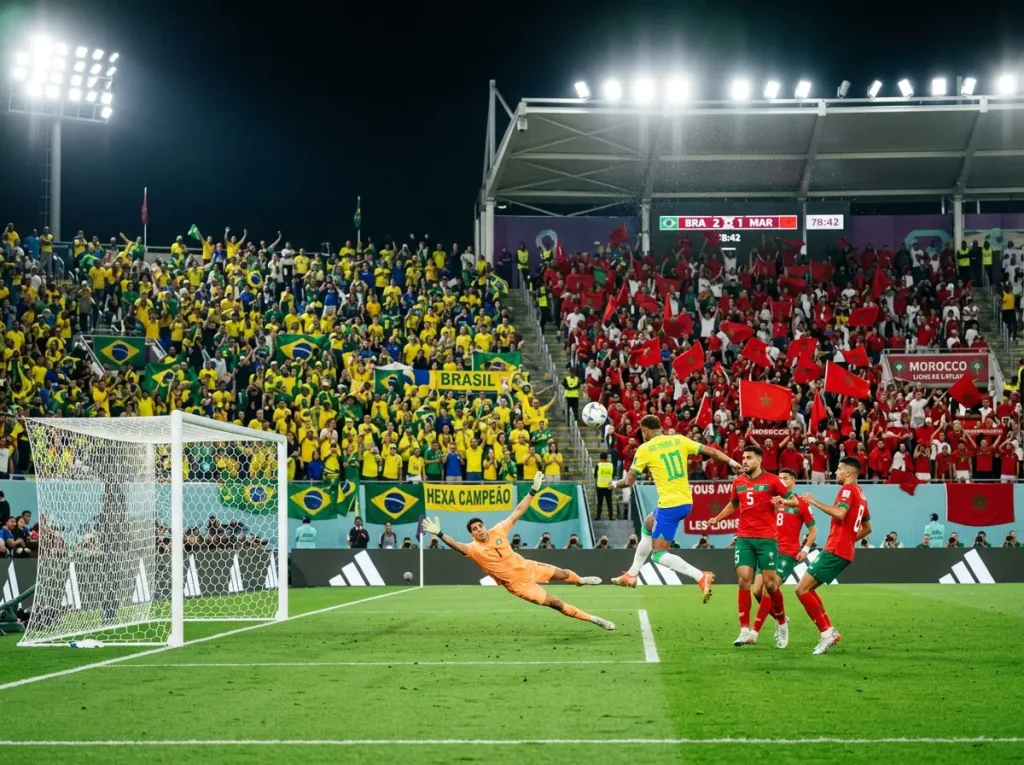
Morocco reached the 2022 World Cup semifinal by dismantling tournament football’s established hierarchy — Belgium, Spain, Portugal all fell to Walid Regragui’s organized press. Now they share a group with Brazil, who watched from home as African football announced its arrival on the global stage. The rematch happens in Group C, where five-time champions meet Africa’s best, alongside Scotland’s tartan army return and Haiti’s debut on the world’s biggest stage. After nine years tracking World Cup betting markets, I recognize this group as one where conventional favouritism might prove insufficient.
Brazil’s rebuild after their 2022 quarterfinal collapse against Croatia continues. Neymar’s international career wound down; Vinícius Júnior assumed the mantle of talisman. Morocco maintained their core while adding depth, their defensive identity now recognized worldwide. Scotland qualified for consecutive major tournaments after decades of near-misses. Haiti represents CONCACAF’s development pathway success, their qualification stunning Caribbean football doubters. Group C’s narrative potential matches any pool in the tournament.
Group C Overview
Draw Brazil in your group and you accept certain realities: their attacking talent will produce chances regardless of tactical approach, their global fanbase ensures hostile atmosphere even at neutral venues, and their coaches’ jobs depend on performance rather than process. But also accept that Brazil’s recent tournament record includes that 2022 Croatia loss, the 2021 Copa América final defeat to Argentina, and a general inability to navigate knockout football’s margins despite squad superiority. Group stage Brazil remains formidable; knockout Brazil has questions.
Morocco’s presence transforms Group C from predictable hierarchy into competitive battle. Their 2022 campaign wasn’t fluke — it reflected tactical evolution, collective identity, and goalkeeper Yassine Bounou becoming tournament saviour. The squad has evolved since Qatar: some players moved to bigger European clubs, others aged past peak, but the core identity of organized defence and transitional danger remains.
The group’s competitive balance creates unusual betting dynamics. Brazil should top the group, but Morocco finishing second isn’t guaranteed against Scotland’s physical approach and Haiti’s unpredictability. The qualification market presents genuine multi-way races where Scotland at 3.50 might offer value against Morocco at 1.70 if you believe European tactical familiarity troubles African pressing.
Third place qualification gives all four teams mathematical pathways. Brazil at 1.05 reflects reality; Morocco at 1.70 seems tight given their quality; Scotland at 3.50 might undervalue their ability to accumulate points against Haiti while stealing from Morocco; Haiti at 7.00 represents long odds that debut tournament energy occasionally defies.
Venue assignments for Group C likely include American locations accessible to Caribbean and European travellers. Florida’s Hard Rock Stadium serves both Brazilian diaspora and Haitian communities; Eastern seaboard venues offer Scotland supporters reasonable transit. The atmosphere variables favour Brazil (significant US-based fanbase) but don’t devastate opponents who’ll bring passionate followings themselves.
Team Profiles
Vinícius Júnior enters 2026 as world football’s most electric attacker. His Real Madrid development under Carlo Ancelotti transformed raw talent into decisive big-game performer — multiple Champions League-defining goals establish credentials beyond Neymar’s successor label. At 25, he’s entering prime years with Brazil’s system built around his directness.
Brazil’s supporting cast reflects the ongoing generational transition. Rodrygo provides right-wing partnership with Vinícius; Endrick emerges as teenage striking sensation with Real Madrid pedigree; Raphinha adds Premier League-tested width. The midfield features Casemiro’s experience declining while Lucas Paquetá and Bruno Guimarães provide current Premier League quality. Defensively, Marquinhos anchors alongside newer partnerships still establishing chemistry.
Brazilian coaching transitions since 2022’s Tite departure introduced instability. The tactical identity shifted — sometimes possessing more patiently, sometimes pressing more aggressively — without consistent philosophy. This variability makes Brazilian matches difficult to model: you can’t predict whether they’ll control 65% possession or play counter-attacking football depending on opponent and scoreline.
Morocco’s 2022 core remains largely intact. Achraf Hakimi provides world-class fullback presence, his Paris Saint-Germain development visible in both defensive solidity and attacking contribution. Sofyan Amrabat’s midfield discipline and Azzedine Ounahi’s creativity provide central balance. Hakim Ziyech returned to the squad after his 2022 retirement reversal, adding experienced creativity in advanced positions.
Moroccan defensive organization produced the tournament’s stingiest goals-allowed record in Qatar — one own goal and one penalty across seven matches. Bounou’s goalkeeper excellence combined with collective pressing discipline creates frustration for possession-heavy opponents. Against Brazil specifically, Morocco’s tactical approach will mirror their Spain and Portugal victories: compact shape, disciplined transitions, clinical finishing from limited chances.
Scotland’s qualification through European playoff success brought relief to a nation that missed Russia 2018 and endured decades of heartbreak. Steve Clarke’s pragmatic approach maximizes limited resources — John McGinn’s energy, Scott McTominay’s late runs, Andrew Robertson’s Premier League class. They won’t dominate possession, but they’ll compete physically and capitalize on set pieces.
Scottish limitations involve attacking creativity against organized defences. Their qualifying goals came predominantly from set pieces, McTominay’s box arrivals, and moments of individual quality rather than systematic buildup. Against Morocco’s defensive structure, Scotland might struggle to create; against Haiti’s potentially more open approach, their directness should yield chances.
Haiti’s World Cup debut represents generational achievement. Their qualification through CONCACAF’s expanded pathway rewarded consistent improvement across multiple cycles. The squad features MLS players (notably Derrick Etienne Jr. and Frantzdy Pierrot) alongside European-based talent in lower divisions. Their technical level has risen dramatically from previous generations that couldn’t compete regionally.
Haitian football’s emotional dimension cannot be quantified but shouldn’t be dismissed. The 2010 earthquake devastated the nation’s infrastructure; World Cup qualification provides genuine national catharsis. Whether that emotion translates into performance or pressure remains uncertain — debut tournament nations historically split between inspired overperformance and stage-fright collapse.
Fixture Schedule and Analysis
Brazil versus Morocco headlines Group C regardless of scheduling placement. The 2022 quarterfinal matchup never happened — both teams fell before meeting — making this their first World Cup encounter since 1998 (Brazil 3-0, hardly representative of current balance). The tactical chess match intrigues: Brazilian possession patience versus Moroccan defensive discipline, Vinícius directness versus Hakimi’s defensive excellence.
Morocco’s approach will mirror their 2022 Spain and Portugal matches. They’ll compress space centrally, force wide circulation, and trust Bounou to handle crosses and shots from distance. Brazilian attacking patterns involve central combination play followed by wide isolation — exactly what Morocco defends best. The match might produce fewer goals than Brazilian attacking reputation suggests.
Scotland versus Haiti presents group hierarchy establishment. Both teams need points from each other to maintain knockout ambitions, creating must-win dynamics from early in the tournament. Scottish physicality should dominate Haitian build-up; Haitian pace might trouble Robertson and Tierney on Scottish flanks. The match feels closer than FIFA rankings suggest.
Brazil versus Scotland tests whether Scottish organization replicates Morocco’s defensive template. Clarke’s pragmatic approach involves similar principles — compact shape, physical midfield, counter-attacking threat — but execution level differs significantly. Brazil should find more space against Scottish pressing than Moroccan equivalents, but Scottish set-piece threat creates danger that Morocco didn’t possess.
Morocco versus Scotland becomes the probable second-place decider. Both teams possess defensive organization; both struggle against similarly pragmatic opponents; both prefer counter-attacking to possession domination. The fixture might produce tactical stalemate, with neither willing to commit forward and leave space. The 0-0 draw probability here exceeds typical group stage fixtures.
Haiti’s fixtures against Brazil and Morocco carry educational dimensions regardless of results. Their tactical approach against genuine world-class opposition provides development data that CONCACAF federations analyze for future cycles. Whether Haiti maintains competitive scorelines or suffers heavy defeats shapes regional football perception for years following.
Final matchday scenarios depend heavily on Brazil-Morocco outcome. If Brazil won that fixture comfortably, they might rotate against Haiti, opening upset space. If Morocco pushed Brazil or stole points, the group’s qualification race extends through final whistle. Scotland-Haiti dynamics similarly pivot on earlier results — one team might be eliminated, another might be fighting desperately.
Group C Odds
Brazil to win Group C opened at 1.50 and has shortened slightly to 1.45 as market efficiency settles. The 69% implied probability seems accurate given Brazilian talent advantages, though Morocco’s challenge prevents certainty. Finding value at 1.45 requires believing Brazil handles Morocco convincingly — possible but not guaranteed.
Morocco at 3.80 for group winner represents the value consideration. Their path requires beating or drawing Brazil while handling Scotland and Haiti efficiently. The 26% implied probability seems harsh given their 2022 semifinal run demonstrated capability against superior opposition. If you believe Morocco’s defensive identity troubles Brazilian buildup, 3.80 offers asymmetric returns.
Scotland at 8.00 and Haiti at 25.00 for group winner require unlikely sequences. Scotland would need Morocco to collapse while they accumulate maximum points; Haiti would need chaos beyond reasonable projection. Neither represents sensible group winner selection, though accumulator builders might sprinkle longshots for potential returns.
Qualification markets price Brazil at 1.05 (95%), Morocco at 1.70 (59%), Scotland at 3.50 (29%), and Haiti at 7.00 (14%). The Scotland line interests me — their ability to take points from Haiti seems near-certain, and stealing results from Morocco isn’t impossible. Third place with 4 points might suffice for advancement; Scotland at 3.50 offers value if you project that outcome.
Match betting for Brazil-Morocco will likely open around Brazil 2.10, Draw 3.30, Morocco 3.80. The draw probability feels undervalued given Morocco’s defensive approach and Brazil’s occasional patience struggles. The 3.30 draw line deserves consideration if tactical analysis suggests low-scoring affair.
Prediction and Best Bets
Final standings projection: Brazil 7 points, Morocco 5 points, Scotland 4 points, Haiti 0 points.
This scenario assumes Brazil beats Scotland and Haiti comfortably while drawing Morocco; Morocco beats Scotland and Haiti while drawing Brazil; Scotland beats Haiti but loses to both Brazil and Morocco; Haiti loses all three despite competitive showings. The 35% confidence reflects Brazil-Morocco uncertainty — either team winning their head-to-head reshuffles the entire group.
Brazil’s knockout path from Group C first place leads toward third-place finishers from weaker groups. Their bracket avoids Argentina until potential final, with France and England on opposite sides. Winning Group C matters enormously for Brazilian ambitions, increasing motivation even in Haiti fixture where rotation temptations exist.
Morocco’s Round of 32 from second place means facing group winners — potentially England from Group L or Portugal from Group K. Their 2022 Portugal victory provides psychological edge, but bracket difficulty increases significantly from first-place outcomes. Morocco has incentive to push for group victory rather than accept second.
Brazil to beat Scotland and Haiti double at approximately 1.40 combined represents the safest Group C selection. Brazilian talent advantages against both opponents seem overwhelming; only set-piece misfortune or bizarre circumstance prevents comfortable victories. The low odds reflect low risk.
Morocco to finish top 2 at 1.35 offers guaranteed-feeling returns. Their defensive quality and tournament experience virtually ensure sufficient points against Scotland and Haiti even if Brazil takes their head-to-head. The market recognizes Moroccan quality; the odds provide steady returns without volatility.
Scotland to qualify at 3.50 represents the value play requiring mild upset. Their path needs 4-6 points — achievable through Haiti victory plus a draw against Morocco or Brazil. Scottish pragmatism produces draws against organized opponents; their direct play scores against compact defences. The 29% implied probability might undervalue their accumulation ability.
Under 2.5 goals in Brazil vs Morocco at approximately 1.85 exploits Morocco’s defensive identity and Brazil’s occasional patience frustration. Morocco conceded one goal (an own goal) across five knockout matches in 2022; Brazil’s possession without penetration against organized blocks produces limited chances. This fixture profiles as tactical chess rather than end-to-end action.
Avoid: Haiti match spreads without lineup confirmation. Their tactical approach might involve defensive consolidation (making spreads difficult) or attacking ambition (making unders difficult). Without knowing Haitian game plans against specific opponents, spreads represent guesswork.